Article: THE PEOPLE BEHIND THE CLOTH
THE PEOPLE BEHIND THE CLOTH
Not Support. Partnership.
On why rural women's enterprises don't need saving — they need valuing. And on why The Elephant Days chose to be inside the ecosystem, not outside looking in.
THE PROBLEM WITH 'SUPPORT'
When brands talk about working with rural or semi-urban women artisans, the word that appears most often is 'support.' We give back. We help. We empower.
That word makes us uncomfortable, because it implies a one-directional relationship — one party giving, the other receiving. It assumes that the women on the other end are waiting for someone to arrive and validate what they do.
They are not waiting. They are already building — reviving ancestral crafts, organizing cooperatives, and maintaining production with skill and determination. The question is not whether to support them. It is whether we are willing to recognize what they already have.
WHAT ACTUALLY CHANGES WHEN RURAL WOMEN EARN
The evidence is clear: when women in rural communities earn income from skilled work, they reinvest a significantly higher proportion into their families than most other earners in children's education, nutrition, and health. A thriving women's enterprise is not just a livelihood. It is infrastructure for the next generation.
And beyond the economics, there is something harder to measure but impossible to ignore: what it means for a woman when the skill in her hands — the craft she learned, the tradition she carries — has real value in a wider market. That shift changes what she believes about herself. And it changes what her daughters believe is possible.
WHY THESE TRADITIONS ARE AT RISK
Rural craft traditions erode slowly and without headlines. When a craft stops being economically viable, young people leave for other livelihoods. The knowledge — which lives in people, not in books — begins to disappear. Many traditions across the subcontinent have already been lost this way. The ones that survive are those that found their way into contemporary markets without compromising what they are.
WHERE THE ELEPHANT DAYS STAND
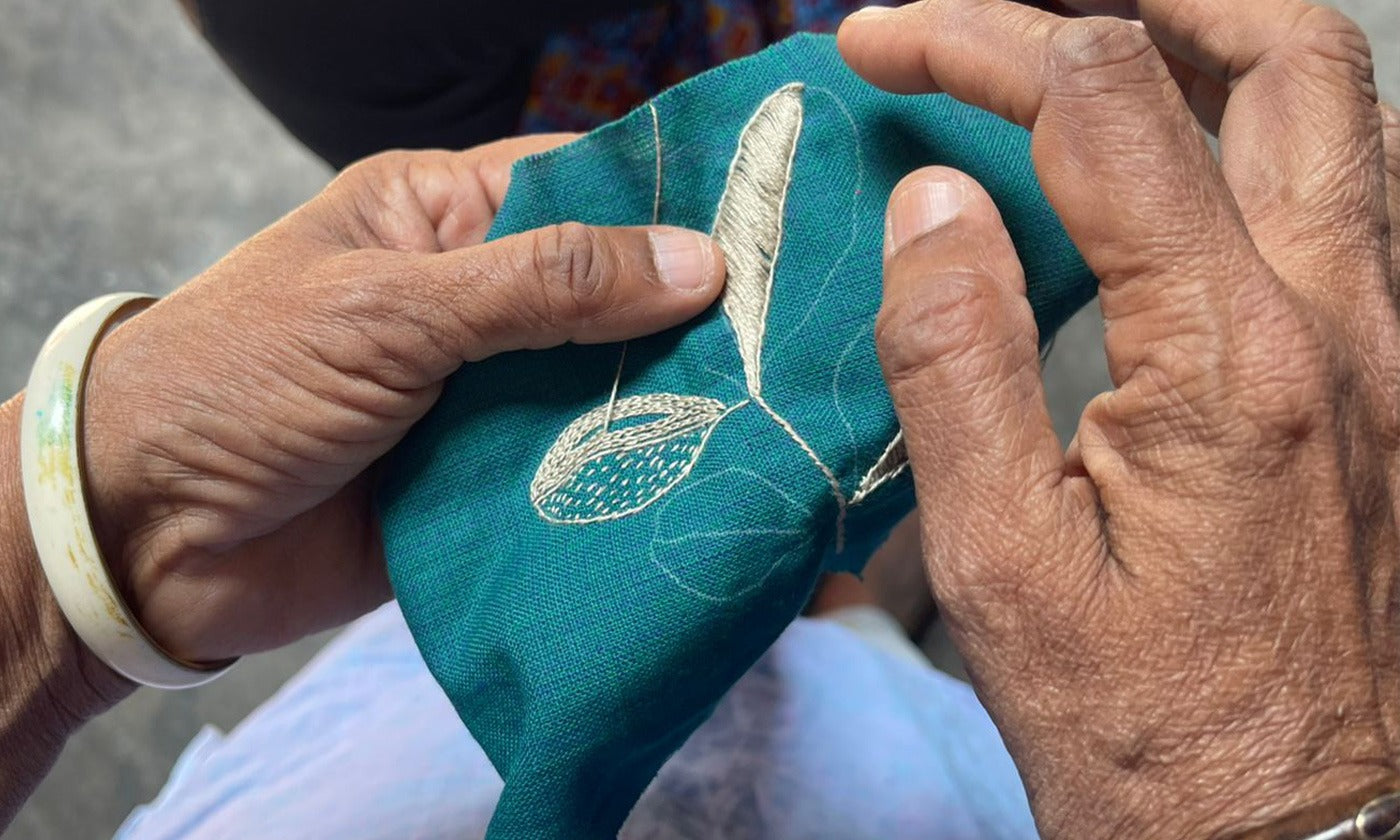
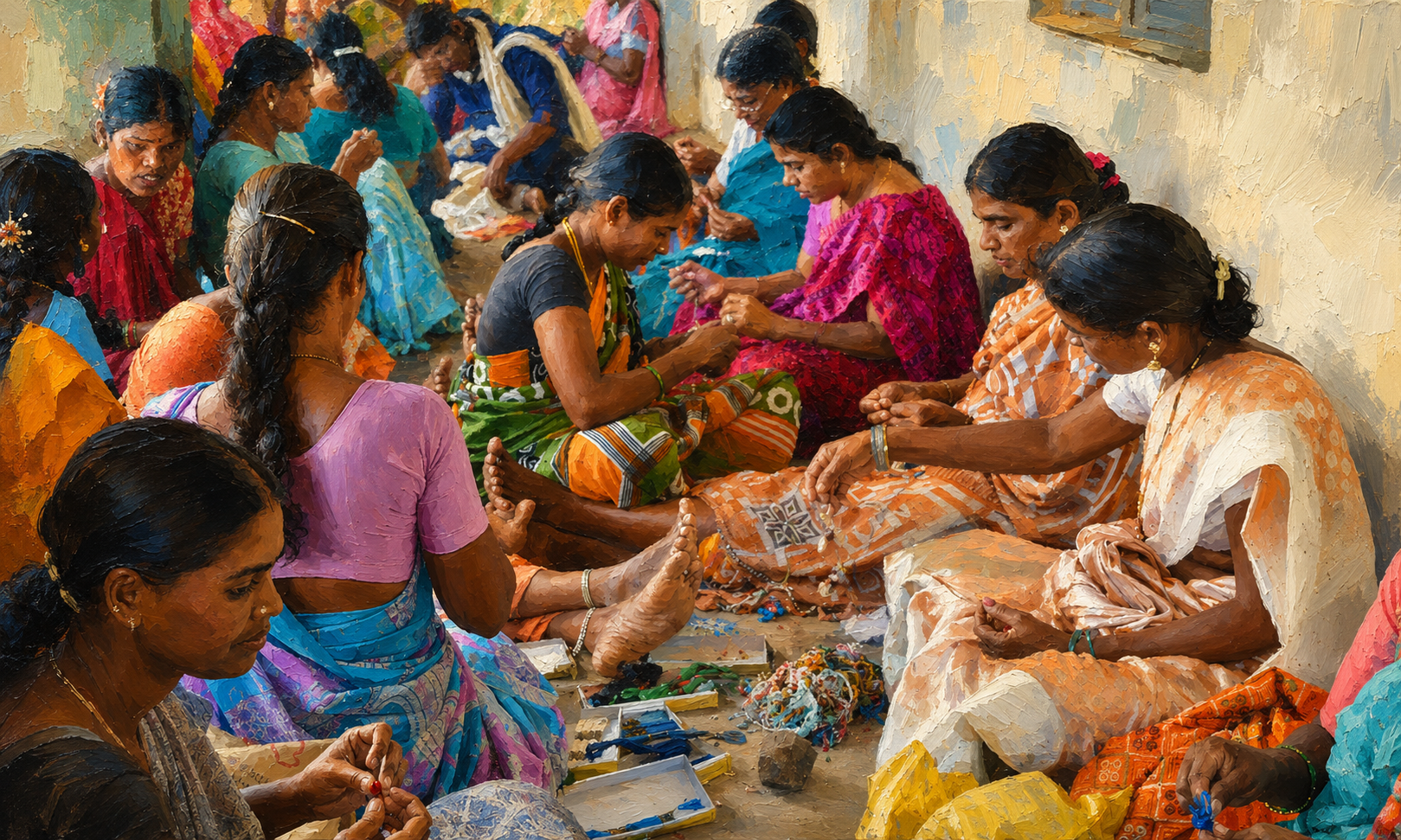
We work with Lambadi women artisans — part of a community whose embroidery tradition was nearly erased and has been painstakingly revived by the artisan organization. Every piece of embroidery on our clothing comes from their hands.
But we want to be honest about what that means to us. We are not patrons. We are a brand that needs skilled hands to make something beautiful, and we found those hands in a community that has been practicing this craft for generations. The relationship is mutual. We are not reaching into their world from outside — we are trying to build something where we are genuinely inside the ecosystem together.
Inclusion, to us, is not a feature we add. It is a structural choice about how we operate. Their skill shapes our product. Their livelihoods grow as we grow. That is not charity. That is how it should work.
The women who embroider our clothing are not behind The Elephant Days. They are inside it.
— The Elephant Days